OPSWAT 得到以下机构的信任
























保护您的系统和用户
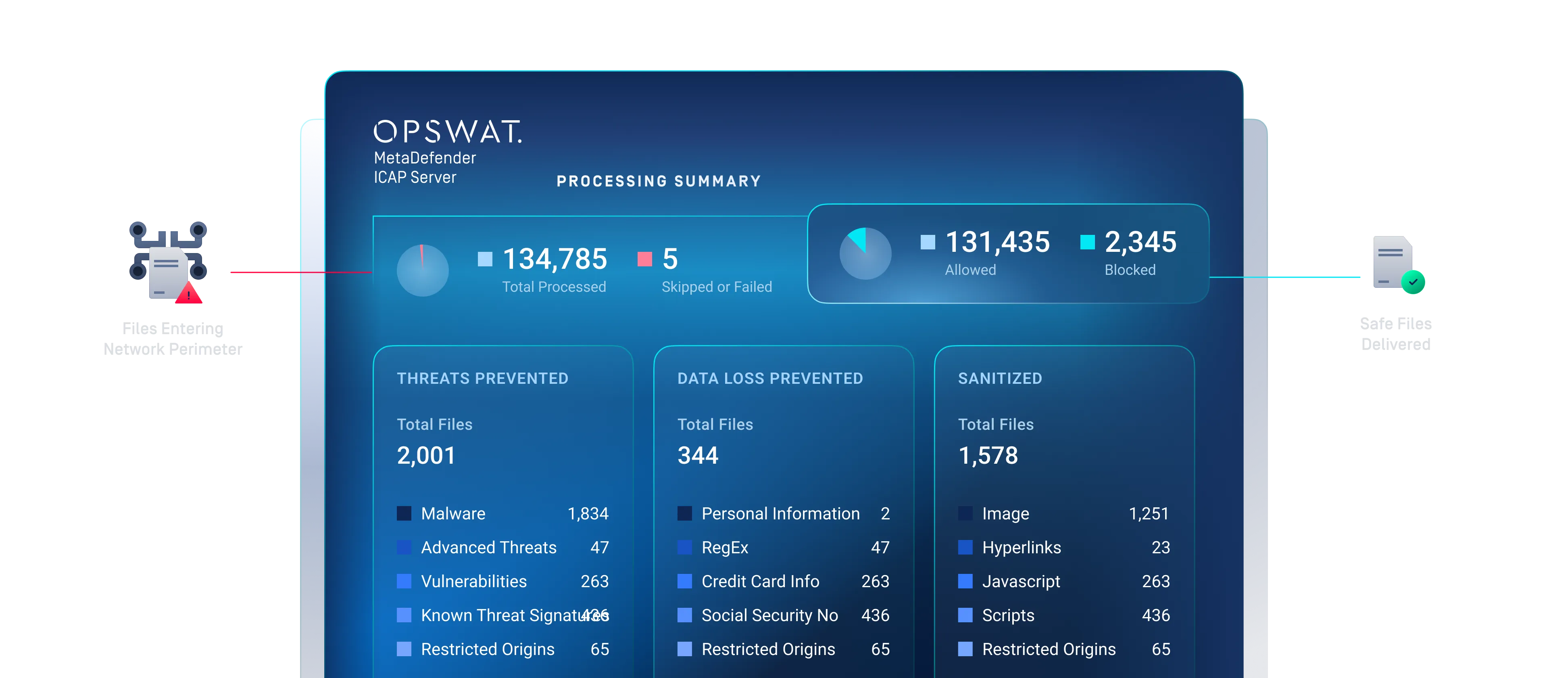
MetaDefender ICAP Server “零信任”策略Server 通过在网络层检查文件内容、拦截威胁或对流经网络流量的文件进行净化处理,从而保障您的系统和用户安全。
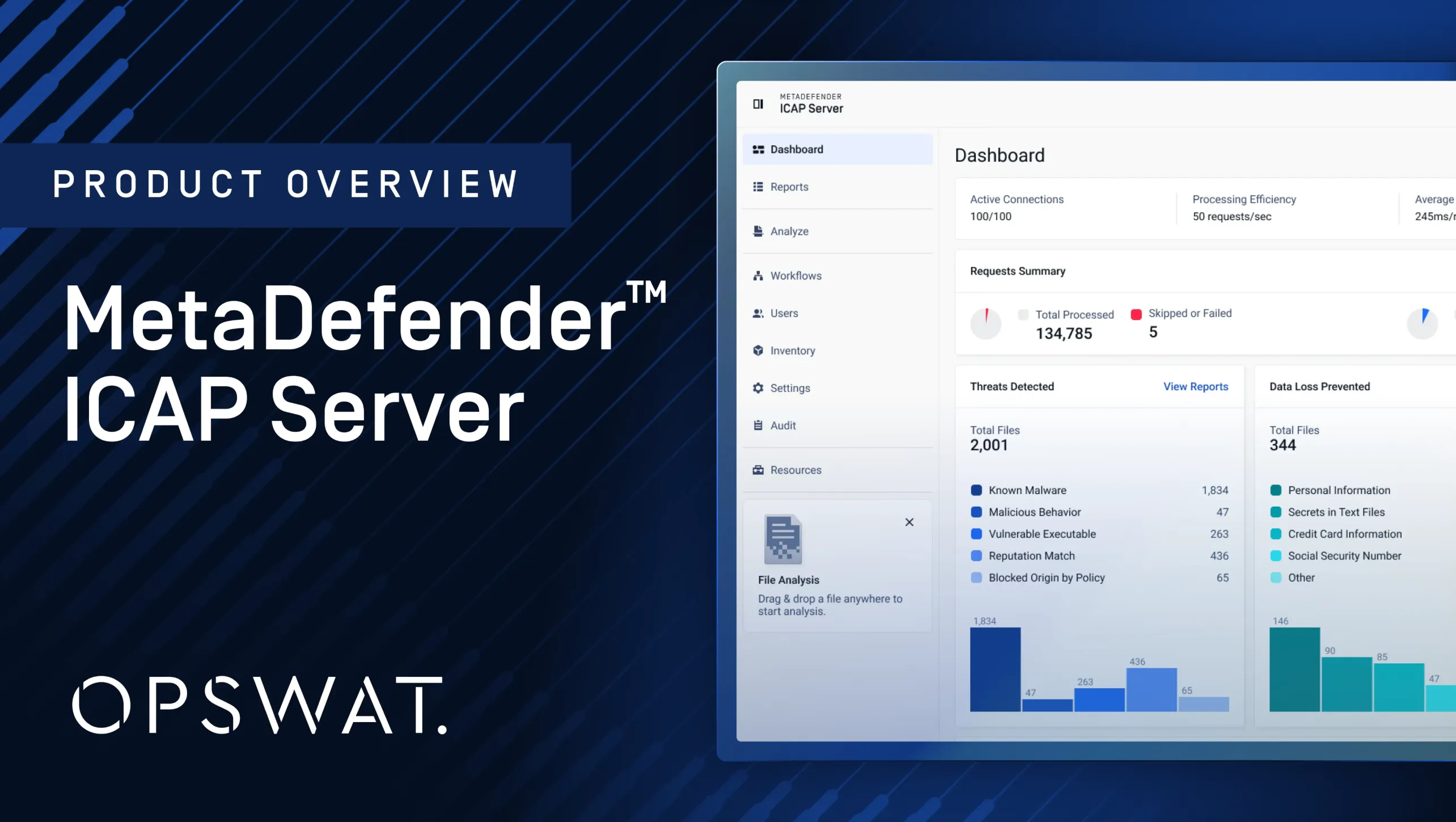
播放列表
2个视频 产品概述:MetaDefender ICAP Server
- 内容检查在网络流量安全中的作用

Secure
检测并阻止零时差和高级规避型恶意软件。
符合要求
保护敏感数据,帮助符合法规要求。
可扩展
扫描大量文件,无集成难题。
多用途
可在 10 分钟内与任何支持ICAP 的安全设备集成。
主要特点与优势
多层文件安全
内置的威胁检测与防御功能利用OPSWAT多层技术,保护 Web 应用程序免受恶意软件、零日攻击、数据丢失以及基于文件的威胁的侵害。
广泛兼容
为您现有的几乎任何网络设备增添一层高级文件安全防护——该方案具备市场上最广泛的兼容性,并已通过OPSWAT 验证集成,涵盖 WAF、负载均衡器、入站控制器、新一代防火墙、应用交付控制器 (ADC) 以及代理服务器。
遵守规定
防止敏感数据或违反政策的数据泄露,以满足 ISO 27001、PCI-DSS、HIPAA 和 GDPR 等合规要求,同时避免处罚并维护客户信任。
灵活且可扩展的部署方案
通过轻量级的ICAP 在 10 分钟内降低运维成本。该方案支持灵活的本地、混合及云部署模式,可适配任何 IT 基础设施,使企业无需进行重大架构调整,即可专注于文件安全。
使用案例


与您现有的
网络基础设施兼容
MetaDefender ICAP Server 您的现有网络基础设施中,在文件到达用户之前对其进行扫描和处理——无需进行重大更改。ICAP 轻量级、标准化的协议,可高效地将病毒扫描及其他安全解决方案添加到您的现有环境中。

与行业领军企业的认证集成
通过与值得信赖的技术供应商建立经过验证的合作关系,企业可以在其现有的网络架构内直接部署先进的文件安全解决方案。
从交通拦截到清洁配送
每个步骤都通过基于策略的ICAP 来保护网络流量和文件交换,该工作流会在数据释放前对威胁进行检测并予以拦截或清理,从而确保实时安全、合规性以及无缝集成,且不会影响性能。

多层
网络流量威胁防范
值得信赖
2,000+
全球各地的组织
30+
用于恶意软件检测的杀毒引擎
预防
零日漏洞利用与隐蔽型恶意软件
数据丢失预防(DLP)
10 分钟内即可与业界领先的设备集成
适用于企业环境的可扩展性
从本地部署到Cloud
灵活、可扩展的MetaDefender ICAP Server 解决方案可与您现有的IT 基础设施集成--无论是内部部署、现代架构,还是通过软件即服务。
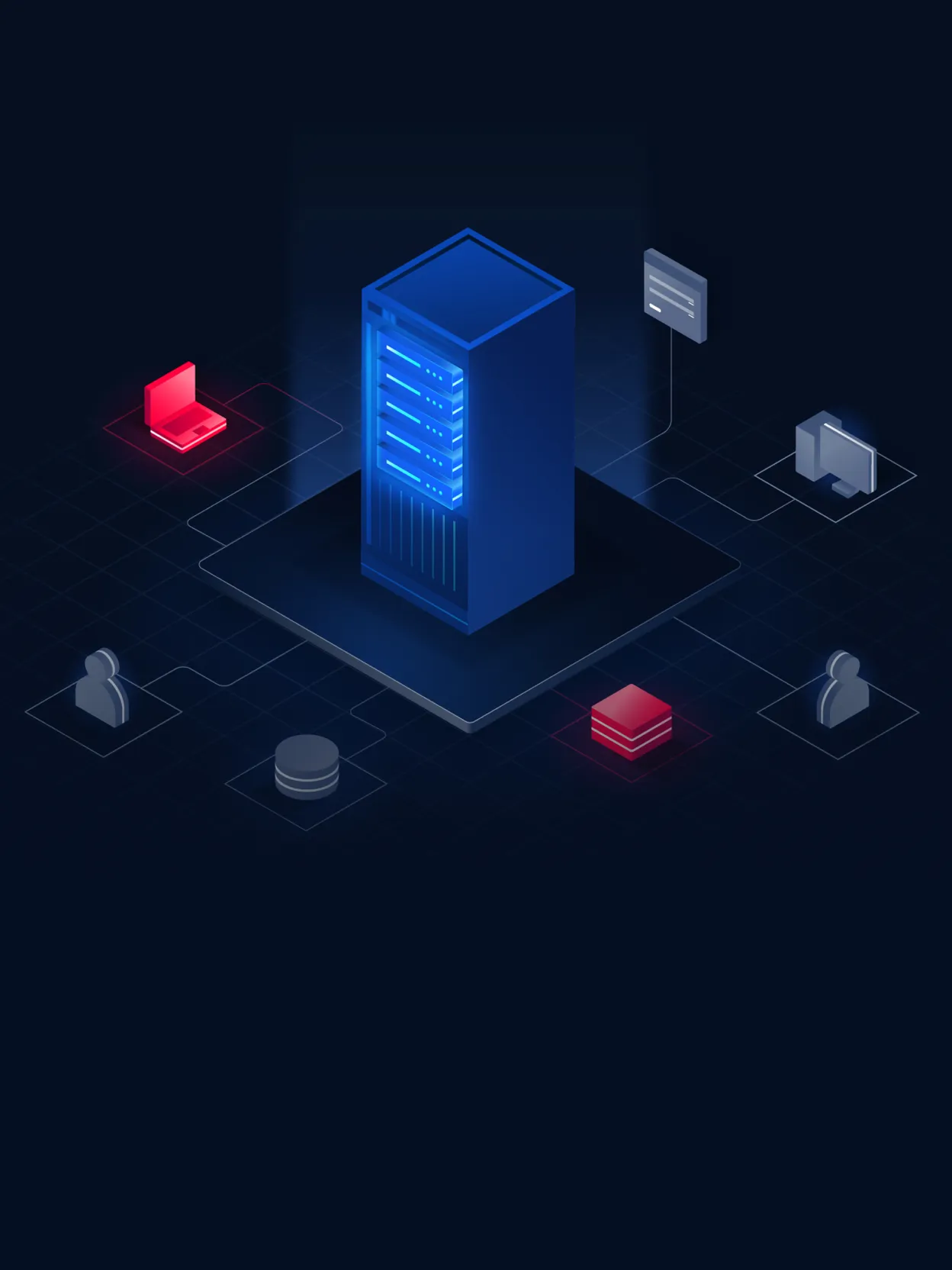
虚拟机:企业内部
适用于拥有本地 IT 环境的组织。

Kubernetes:内部部署和混合部署
适用于采用现代架构、分布式应用程序和容器化技术的企业。

Cloud:软件 即服务(SaaS)
适用于IT资源有限或倾向于采用云原生解决方案的企业。

经实践验证的防护方案,适用于全球最
Secure

将 MetaDefender ICAP Server 与 F5 集成
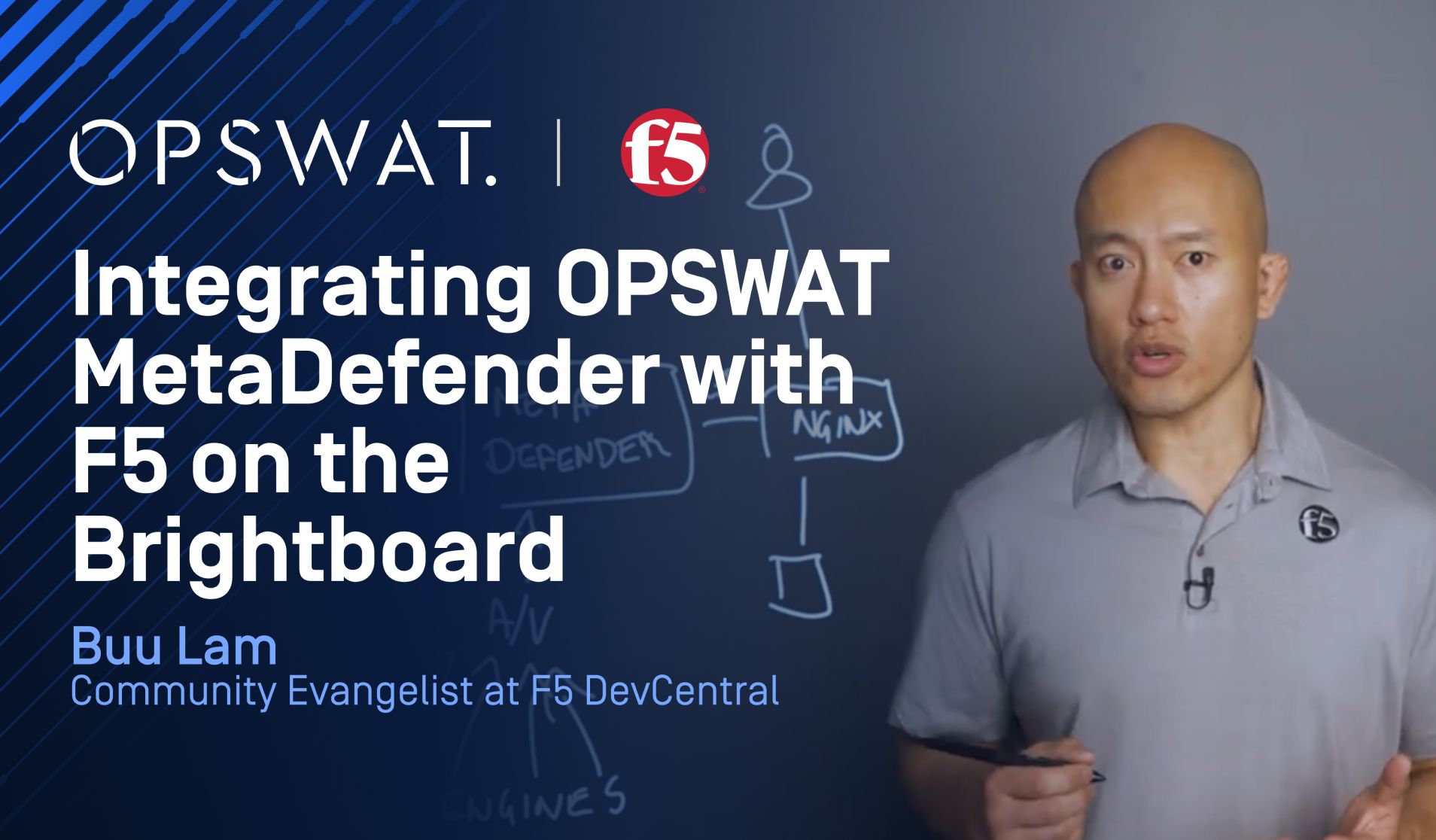
F5 DevCentral 社区布道师 Buu Lam 深入探讨了MetaDefender ICAP Server 与 F5 BIG-IP、NGINX 和 F5 DistributedCloud 平台的集成。了解如何有效扫描文件内容并利用OPSWAT 高级威胁防御功能来保护您的网络流量。

OPSWAT 多年来一直是F5值得信赖的合作伙伴,提供先进的文件安全性,与F5应用交付和安全平台(ADSP)相辅相成。通过将OPSWAT的MetaDefender 与 F5 ADSP 集成,客户可受益于无缝、一致的安全性,同时在任何地点、任何外形尺寸上交付应用程序和 API 并确保其安全。我们将共同为企业创造价值,帮助他们降低风险、确保合规性并保护关键数据。
专为支持法规及行业合规而设计




三步轻松入门




与我们的专家联系
请填写此表单OPSWAT 将在 24 小时内与您联系,对您的环境进行评估,了解您的需求,并为您推荐最合适的解决方案。
无缝集成
只需几分钟,即可将MetaDefender ICAP Server 部署Server 您的现有基础设施Server 。无需中断工作流程或进行复杂的更改,即可与ICAP设备集成。
放心保护
通过多层威胁防护机制,对传输中的每个文件进行扫描和保护,确保您的整个网络始终受到保护、符合合规要求,并让您高枕无忧。
部署和使用

推荐资源
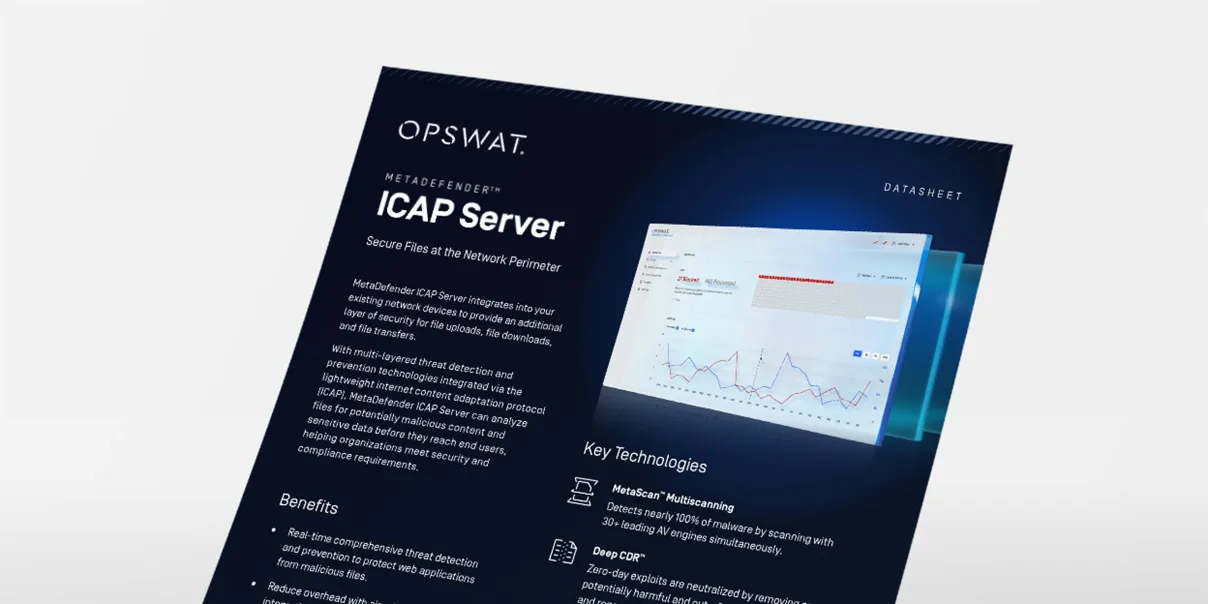
MetaDefender ICAP 服务器产品型录
防止文件传播的恶意软件:网络安全拼图中缺失的部分

MetaDefender ICAP Server
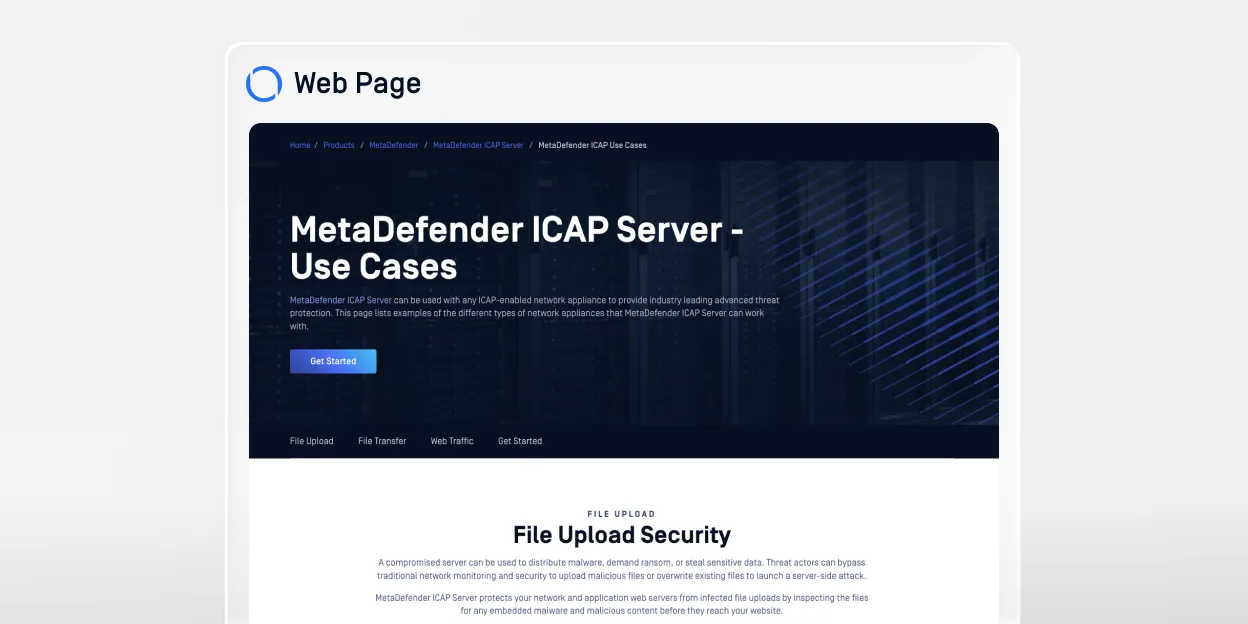
MetaDefender ICAP Server 使用案例

网络流量安全中的内容检测
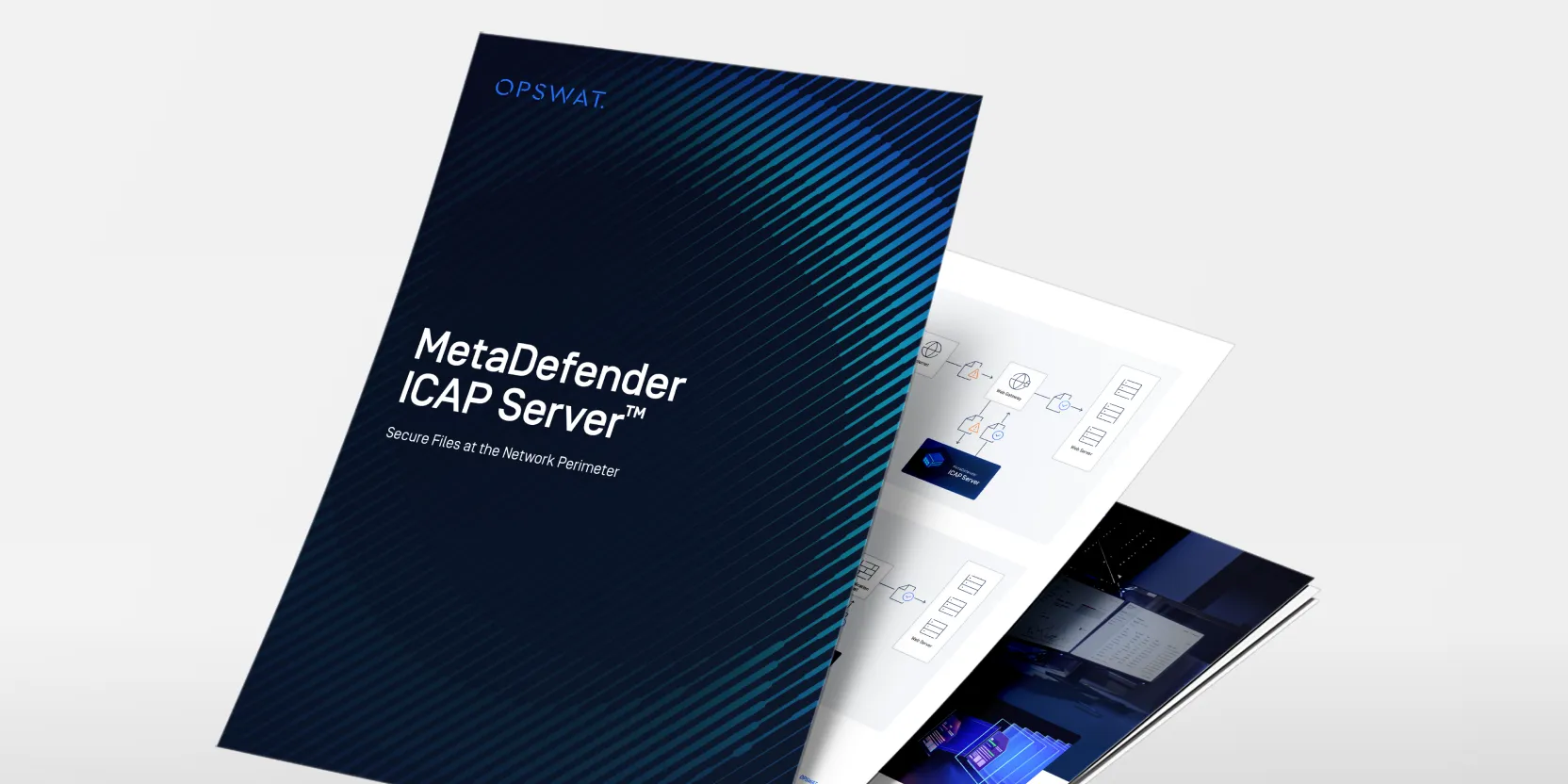
MetaDefender ICAP Server 手册

您的企业有保护身份验证资料的需求吗?看看全球线上游戏平台如何利用MetaDefender ICAP Server保护玩家机密资讯
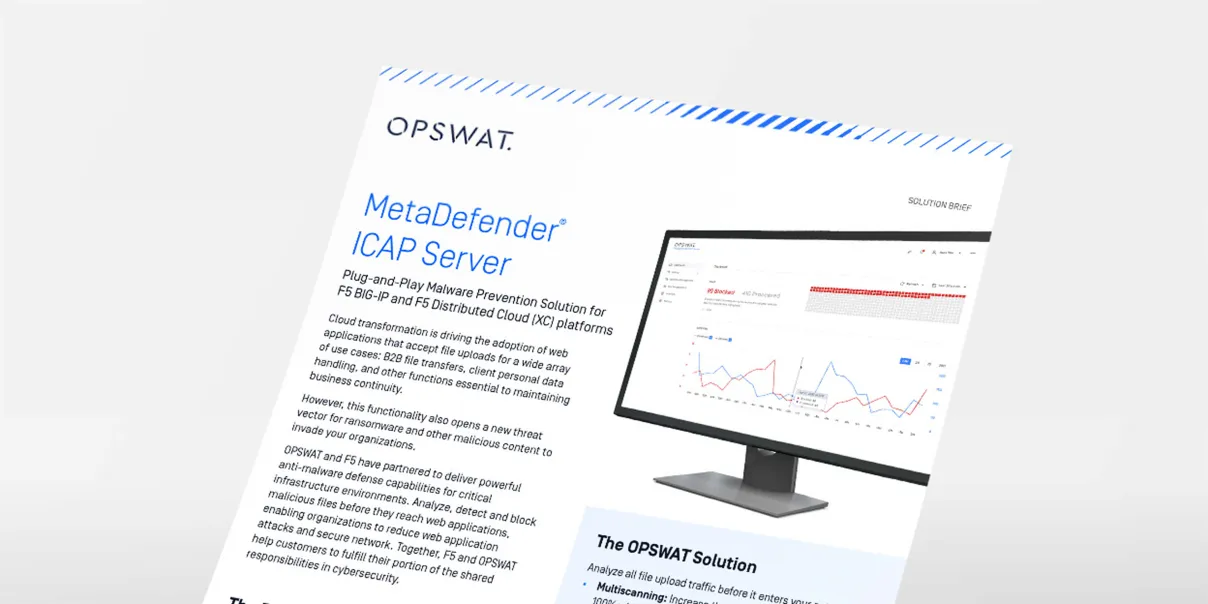
MetaDefender ICAP Server F5 解决方案简介

MetaDefender ICAP Server 与 NGINX 集成

ICAP Server 文件安全集成

MetaDefender ICAP Server 部署
0 条结果。请重试。
常见问题
MetaDefender ICAP Server 利用ICAP 对基于文件的网络流量Server 在线检测,以实时检测恶意软件、防止数据泄露并执行安全策略。
它可与ICAP设备集成,例如 Web 应用防火墙(WAF)、代理服务器、负载均衡器、新一代防火墙以及托管文件传输解决方案。
它采用了OPSWAT多层防护机制,包括Multiscanning、Deep CDR™ 技术、Proactive DLP以及Adaptive Sandbox。
是的。它支持ICAP 和响应模式,能够根据预定义的安全策略,对进出网络的文件进行检查。
MetaDefender ICAP Server 在本地、混合或云环境中,并能与现有网络架构无缝集成,对运营的影响极小。
