在企业
信任边界内Secure 传输
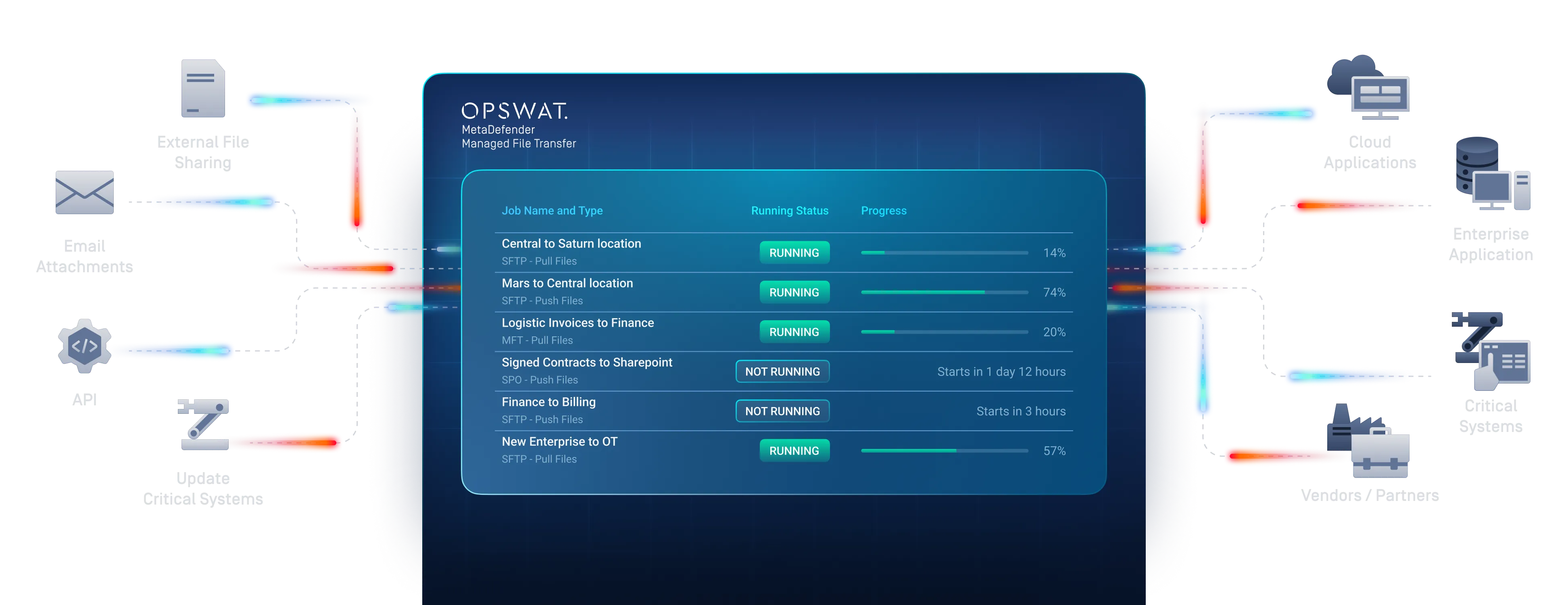
利用基于策略的控制措施、深度检测以及符合
合规要求的治理机制,保护敏感数据在IT、OT、云和合作伙伴环境间传输时的安全。
- 跨域保护
- 基于风险的控制措施
- 合规调整
OPSWAT 得到以下机构的信任























企业文件迁移为何会带来隐性风险


文件传输绕过安全边界
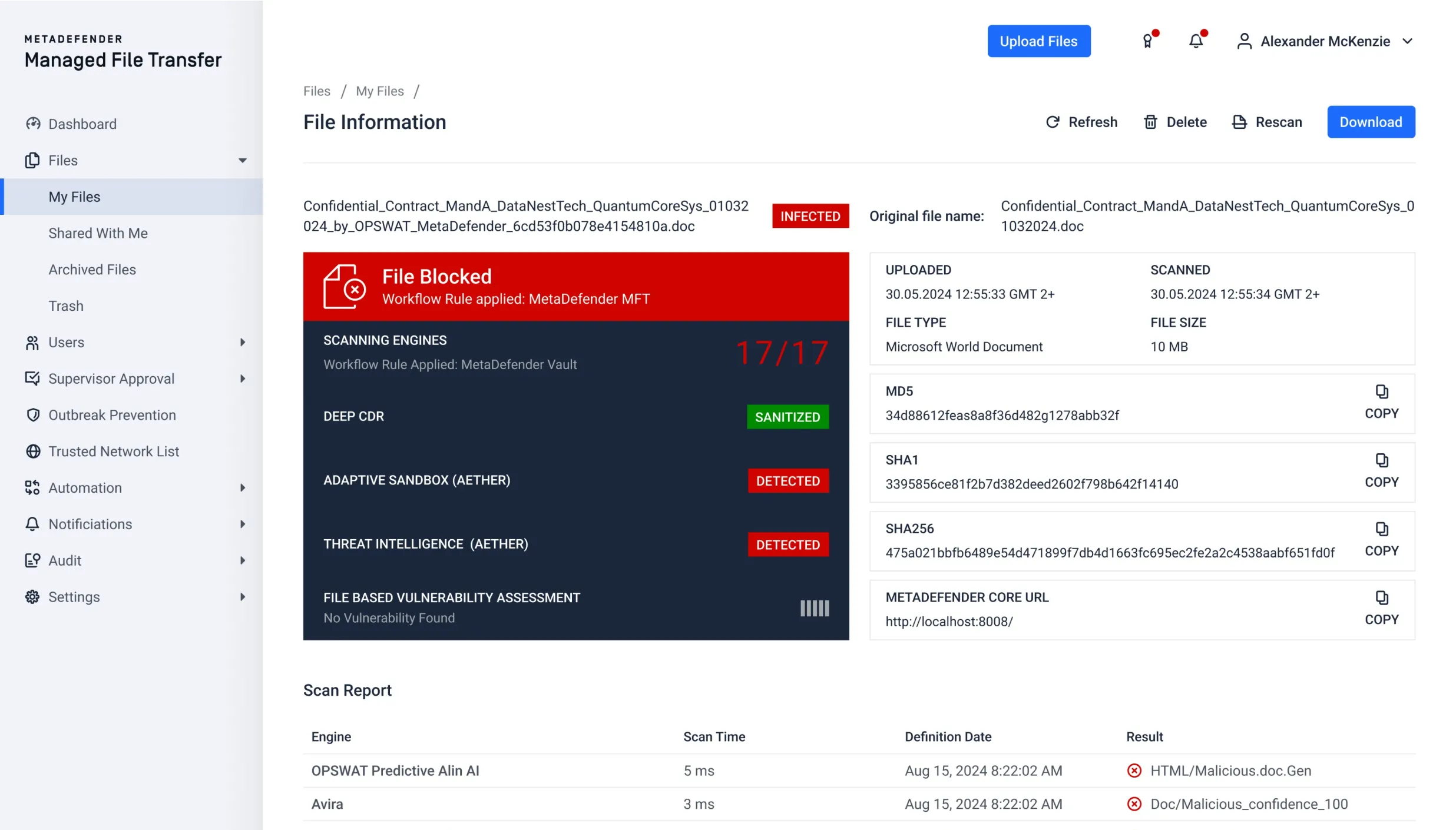
文件经常在用户、网络、云平台和操作系统之间传输,却未经过深入检查,这使得恶意软件、零日漏洞利用和嵌入式有效载荷能够在未被察觉的情况下跨越信任边界。


文件工作流中的审计漏洞
组织必须证明其能够有效管控文件的访问、流转、审批和存储流程。孤立的工具会导致政策执行和监管报告方面出现盲区。


IT–OT 与跨领域风险
在受监管和工业环境中,安全域之间的文件交换会带来风险。如果没有内置的检测和强制执行机制,基于文件的威胁可能会在系统间横向传播。
一种基于安全嵌入式方法的
企业文件传输方案
OPSWAT 通过MetaDefender Managed File Transfer MFT)OPSWAT 企业OPSWAT 跨信任边界的文件安全传输。该方案集成了嵌入式检查、策略执行和集中式治理功能,并借助 Predictive Alin AI 实现基于人工智能的恶意软件检测,可在文件传输前对基于文件的威胁进行预执行零日检测。

先查验,再信任
每个跨越安全边界的文件在到达目的地之前都会经过分析。通过在传输工作流中嵌入高级检测机制(包括基于人工智能的恶意软件检测),企业能够防止恶意软件传播、数据泄露以及基于文件的威胁在用户、网络和运营系统之间扩散。

在所有安全区域中强制执行策略
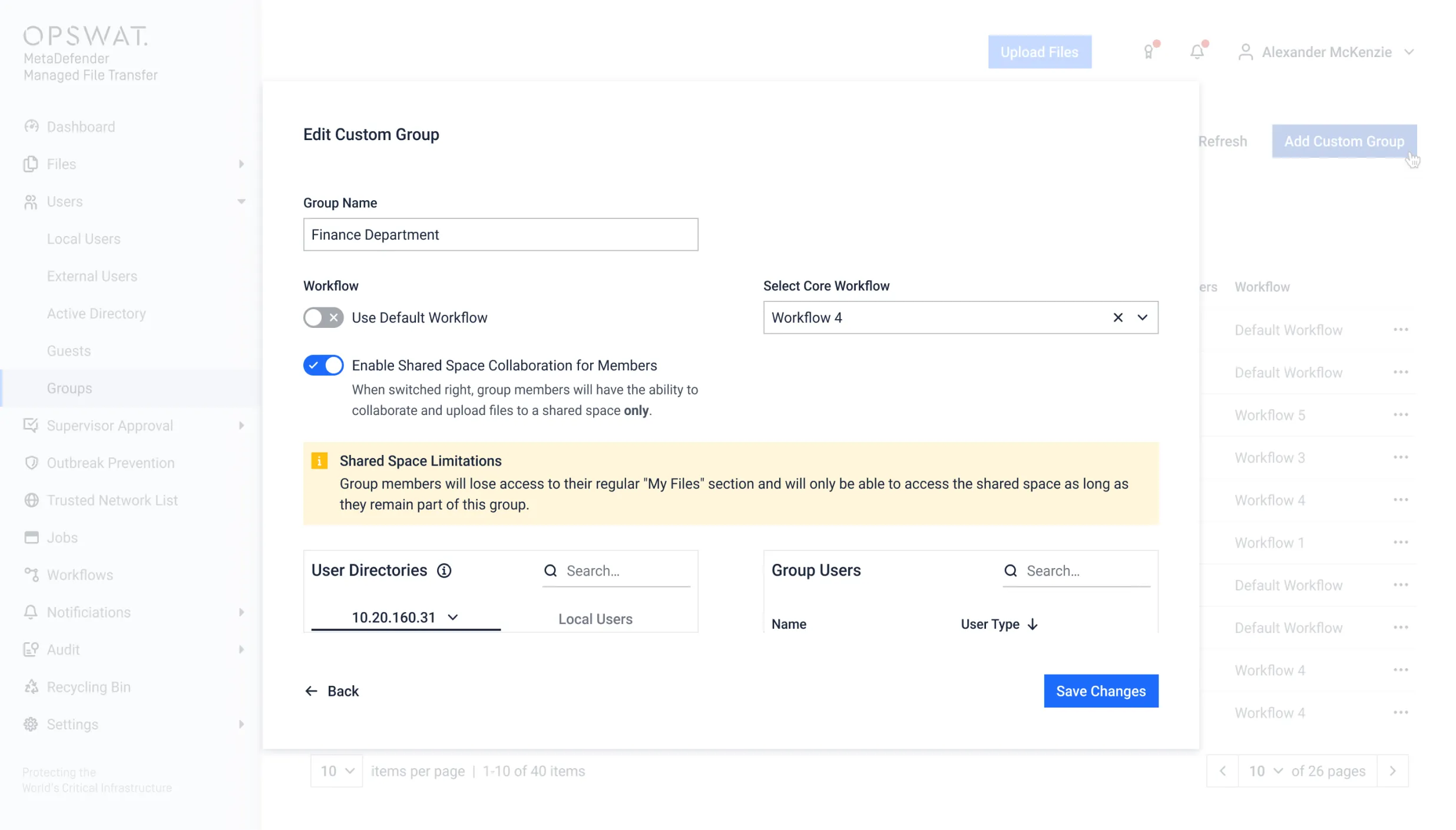
基于逻辑的精细化策略定义了文件在不同环境间如何传输。基于元数据、用户角色和风险状况的条件确保只有在满足安全、合规和运营标准时,才会进行文件传输。
企业级治理与审计
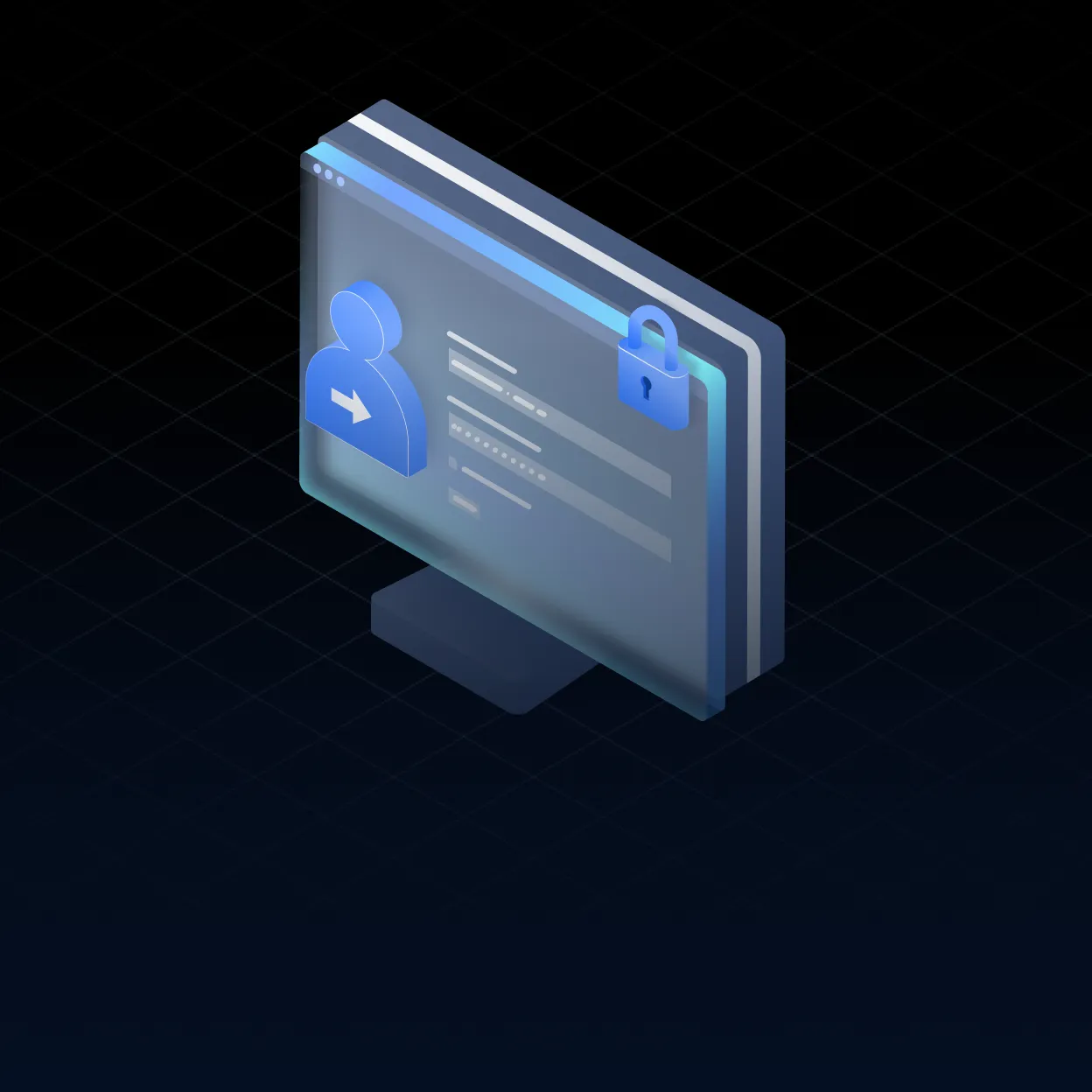
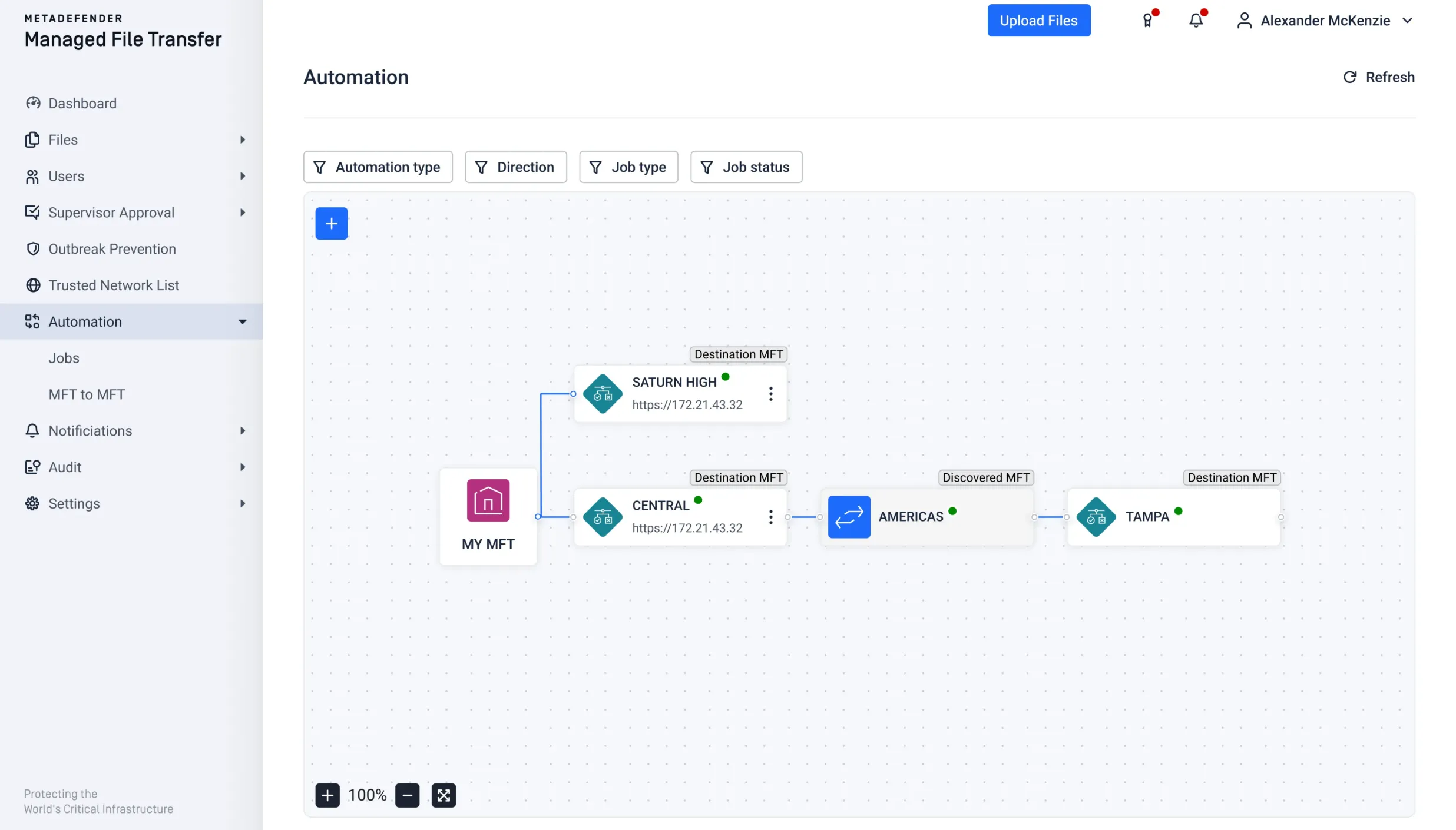
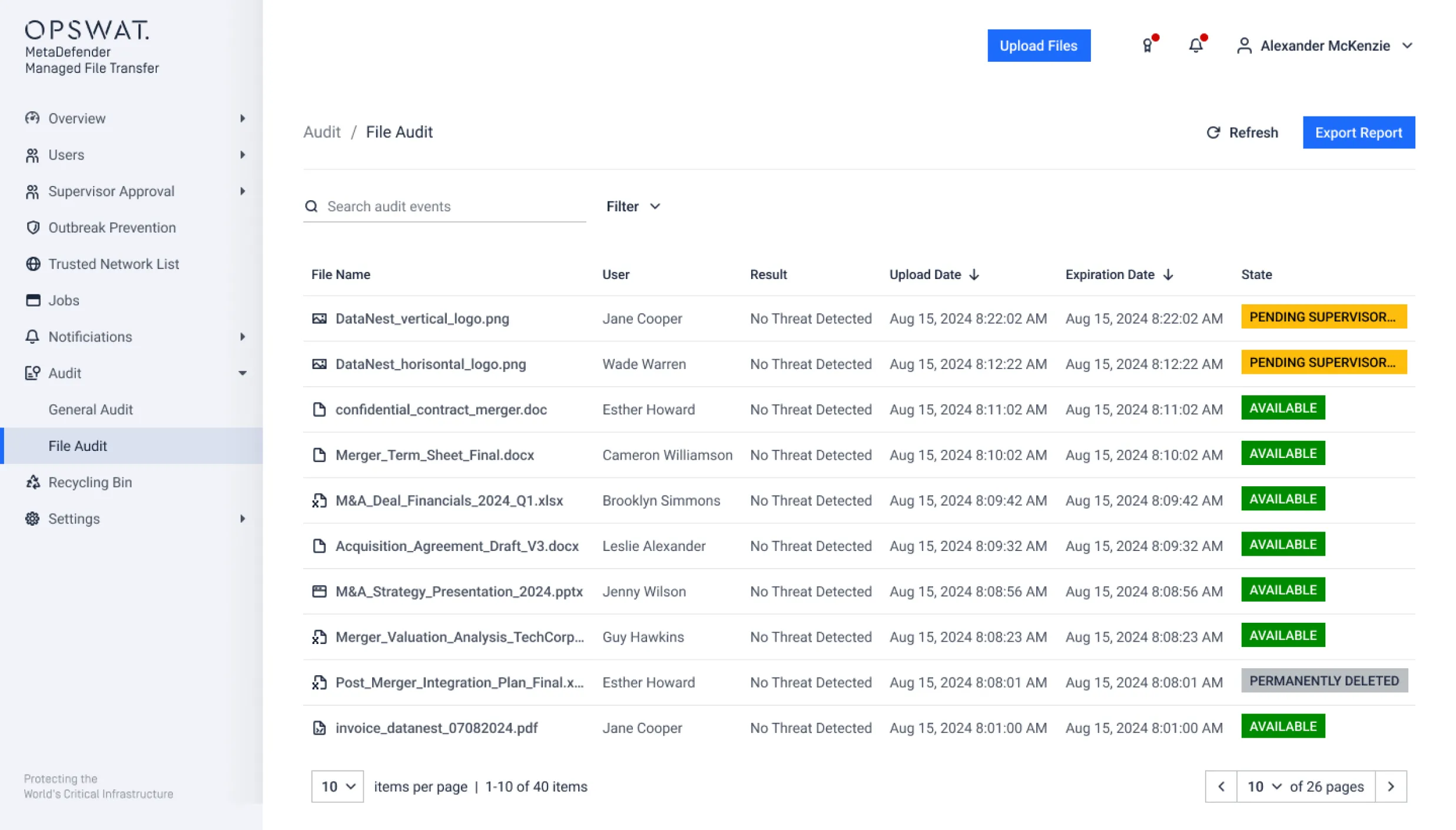
集中式可视化功能可提供文件移动的全生命周期视图——包括发起者、检查方式、移动路径以及策略执行情况——从而支持合规性对齐和高管监督。
主要功能
跨域文件控制
利用预定义的信任策略控制文件在低安全级别环境与高安全级别环境之间的流动,确保敏感文件或不可信文件无法绕过安全检查点。
基于风险的工作流执行
根据检查结果(包括基于人工智能的恶意软件检测、元数据分类以及组织政策)自动执行文件路由决策,从而减少人为错误并确保治理的一致性。
分段环境支持
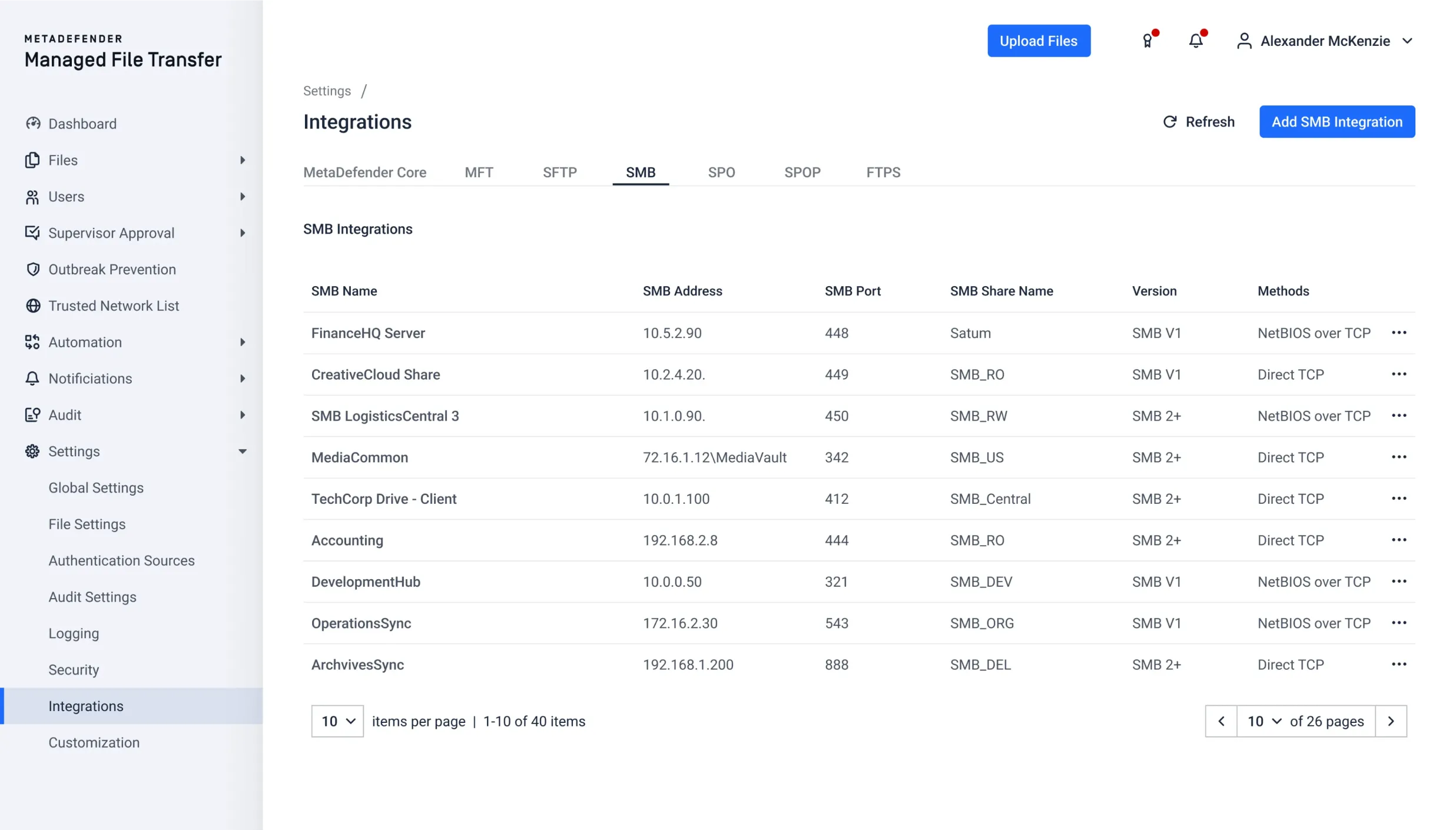
在企业 IT、运营技术(OT)、云端及合作伙伴生态系统中实施统一的管控措施,从而降低跨安全域的横向移动风险。
- MetaDefender Managed File Transfer

- MetaDefender Managed File TransferMetaDefender Managed File Transfer

- MetaDefender Managed File Transfer


集中式政策治理
通过统一的政策管理和审计可视性,在各业务部门、子公司及全球运营中实现合规执行的标准化。
全面的审计日志记录
维护文件活动和执法决定的全面记录,以支持HIPAA、GDPR、NIS2、PCI、FISMA和NIST等框架。
- MetaDefender Managed File Transfer
- MetaDefender Managed File Transfer
亲眼见证MetaDefender Managed File Transfer 应用
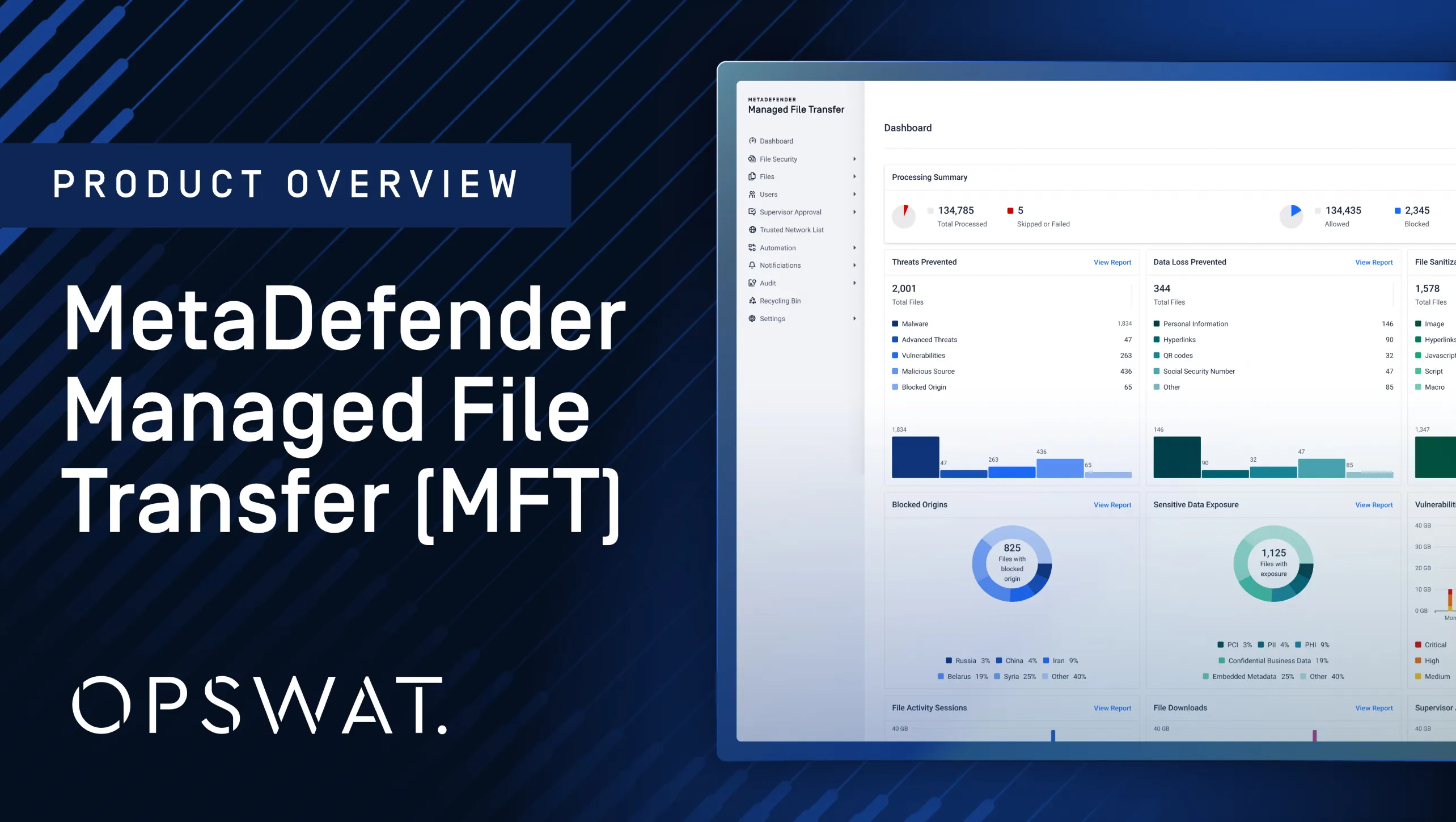
了解MetaDefender Managed File Transfer MFT) 如何通过内置威胁防护、策略执行、工作流自动化以及覆盖 IT 和 OT 环境的集中可视化功能,保障文件交换的安全。
播放列表
5个视频 MetaDefender Managed File Transfer MFT) 产品概述
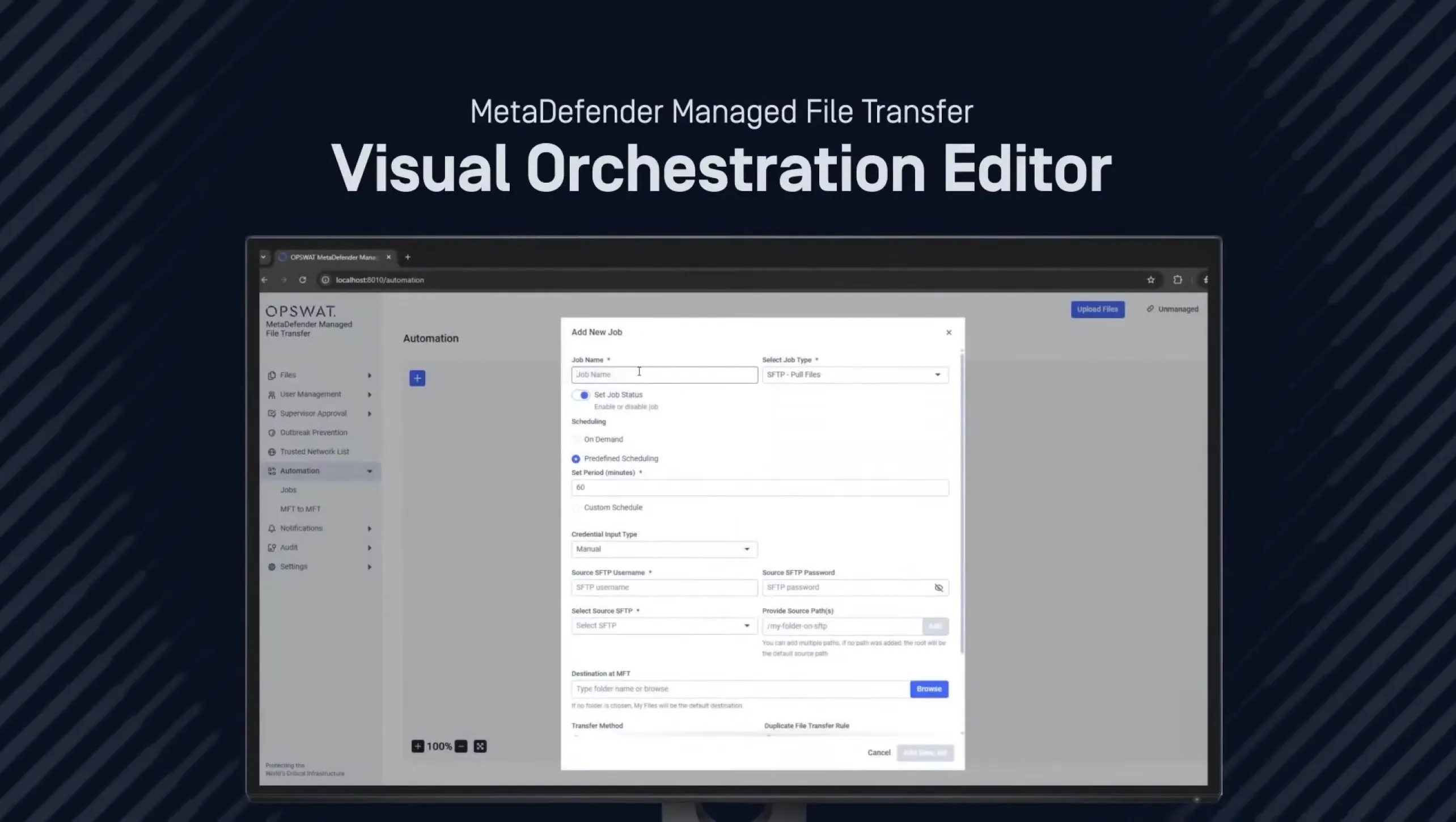
- 借助全新的可视化编排编辑器简化Secure 传输 |MetaDefender MFT
- 现场演示:了解OPSWAT Managed File Transfer 信息技术环境中的活跃恶意软件
- 如何保护运营技术(OT)环境免受不安全文件传输的威胁
- 如何在MetaDefender Managed File Transfer中启用管理员审批功能


被G2评为MFT 领域的领导者











保障高风险行业中的文件传输安全
在受监管、分段式及关键基础设施环境中运营的组织,必须确保文件在系统、用户和安全区域之间的传输安全。嵌入式检查和策略执行有助于防止基于文件的威胁扰乱运营或泄露敏感数据。
能源与公用事业
能源运营商通常会在企业IT网络与工业控制网络之间传输工程文件、配置更新和运行报告。如果不在传输节点进行检查,基于文件的威胁可能会侵入运营技术(OT)环境并导致运营中断。确保文件在信任边界之间的安全传输,有助于降低网络物理风险,同时保持运营连续性。

制造业
制造商会在分段环境中交换生产文件、固件更新和供应商数据。一个受感染的文件就可能在工厂系统中横向传播。通过实施检查点和基于策略的路由,可以降低因文件传播威胁导致的运营停机风险。

政府
政府机构需要管理来自内部各部门及外部合作伙伴的敏感和机密信息。Secure 传输Secure 必须建立可强制执行的审批工作流、可追溯的审计日志,并在不同安全域之间实施受控的文件流转,以满足国家安全和监管要求。

财务
金融机构每天都会传输报告、客户数据、交易文件和第三方文档。如果没有集中化的可视化管理和基于风险的控制措施,组织将面临合规漏洞和潜在的数据泄露风险。Secure 治理有助于确保符合金融监管规定和数据保护法律。

医疗保健
医疗机构会在医疗服务提供者、保险公司和云系统之间交换患者病历、影像文件及计费数据。通过实施检查、加密和有记录的访问控制,既能降低个人健康信息(PHI)泄露的风险,又能确保符合《健康保险流通与责任法案》(HIPAA)及数据保护法规的要求。

Media 娱乐
Media 会在全球各地的制作团队和合作伙伴之间传输大型视频及创意素材。内置的安全控制措施可在文件交换过程中,保护知识产权免受篡改、隐藏恶意软件或未经授权的再分发。

- 能源与公用事业

能源与公用事业
保护关键基础设施中的IT与OT数据交换能源运营商通常会在企业IT网络与工业控制网络之间传输工程文件、配置更新和运行报告。如果不在传输节点进行检查,基于文件的威胁可能会侵入运营技术(OT)环境并导致运营中断。确保文件在信任边界之间的安全传输,有助于降低网络物理风险,同时保持运营连续性。
- 制造业
制造业
防止恶意软件在生产系统中传播制造商会在分段环境中交换生产文件、固件更新和供应商数据。一个受感染的文件就可能在工厂系统中横向传播。通过实施检查点和基于策略的路由,可以降低因文件传播威胁导致的运营停机风险。
- 政府
政府
管控机密和敏感数据的交换政府机构需要管理来自内部各部门及外部合作伙伴的敏感和机密信息。Secure 传输Secure 必须建立可强制执行的审批工作流、可追溯的审计日志,并在不同安全域之间实施受控的文件流转,以满足国家安全和监管要求。
- 财务
财务
减少数据泄露风险及合规风险金融机构每天都会传输报告、客户数据、交易文件和第三方文档。如果没有集中化的可视化管理和基于风险的控制措施,组织将面临合规漏洞和潜在的数据泄露风险。Secure 治理有助于确保符合金融监管规定和数据保护法律。
- 医疗保健
医疗保健
保护临床系统中的患者数据医疗机构会在医疗服务提供者、保险公司和云系统之间交换患者病历、影像文件及计费数据。通过实施检查、加密和有记录的访问控制,既能降低个人健康信息(PHI)泄露的风险,又能确保符合《健康保险流通与责任法案》(HIPAA)及数据保护法规的要求。
- Media 娱乐
Media 娱乐
高价值数字资产SecureMedia 会在全球各地的制作团队和合作伙伴之间传输大型视频及创意素材。内置的安全控制措施可在文件交换过程中,保护知识产权免受篡改、隐藏恶意软件或未经授权的再分发。
随处部署,随处集成
一款可扩展、功能全面的托管文件传输解决方案,可无缝集成,并随您的文件随时随地进行传输。

企业内部
在受监管网络和工业网络内,Secure 及物理隔离环境下的文件交换Secure 。

Cloud
保护跨SaaS平台、云存储及分布式团队的文件工作流。

混合动力
在IT、OT和云基础设施混合环境中实施一致的安全与治理措施。

集成
Secure 工作流可与企业存储系统、SFTP 服务、协作平台以及 SIEM 环境集成,从而在整个组织范围内统一检查、策略执行和监控工作。
有关先进的嵌入式检测技术(包括基于人工智能的恶意软件检测)以及详细的集成功能:
客户成功



专为监管及
运营问责而设计
企业文件传输必须符合数据保护、行业规定和审计要求。OPSWAT 可执行的策略、检查点和有据可查的控制措施,以支持 HIPAA、GDPR、NIS2、PCI、FISMA 和 NIST 等合规计划。
Secure 传输常见问题解答
当文件在用户、系统或安全区域之间传输时,可能会携带隐藏的恶意软件、嵌入式脚本或未经授权的数据。在跨域环境中(例如从IT网络到OT网络,或从内部网络到外部合作伙伴网络),传输前的检查(包括利用Predictive Alin AI进行的人工智能驱动的恶意软件检测)有助于在已知威胁和零日威胁绕过边界防御并横向传播之前将其识别出来。
基于文件的攻击通常始于恶意附件或遭入侵的文档。当此类文件未经检查就在各部门、云平台或运营系统间共享时,其中嵌入的有效载荷便可能在新环境中执行。加强文件传输的安全防护,可降低这种横向传播的风险。
加密技术可保护传输中的数据免遭截获,但不会分析文件内容。经过加密的恶意文件仍可能安全抵达目的地,并在被打开后执行。要实现有效的文件安全,除了加密之外,还需进行文件检查并执行相关策略。
运营技术(OT)环境通常缺乏企业IT系统中常见的终端防护措施。如果受感染的文件进入OT网络,可能会影响工业控制系统、生产线或关键基础设施。保障IT与OT之间的文件传输安全,有助于降低网络物理风险。
合规框架要求能够清晰掌握数据的访问、传输和存储情况。实施可执行的政策、建立有据可查的审批流程以及采用集中式审计日志记录,有助于证明对文件流动的管控能力,并降低合规风险。
基本的文件传输主要侧重于将数据从一个位置转移到另一个位置。Secure 治理则增加了检查、策略执行、访问控制和可追溯的日志记录等功能,以确保文件的传输既安全,又符合组织和监管要求。
零信任模型认为,任何文件、用户或系统都不应被默认信任。在文件传输检查点实施检查和策略控制,可确保每个跨越信任边界的文件在进入敏感环境之前都经过验证。
在以下情况下,组织应重新评估文件传输的安全性:
- 扩展云或混合环境
- 连接 IT 和 OT 网络
- 与新的外部合作伙伴建立合作关系
